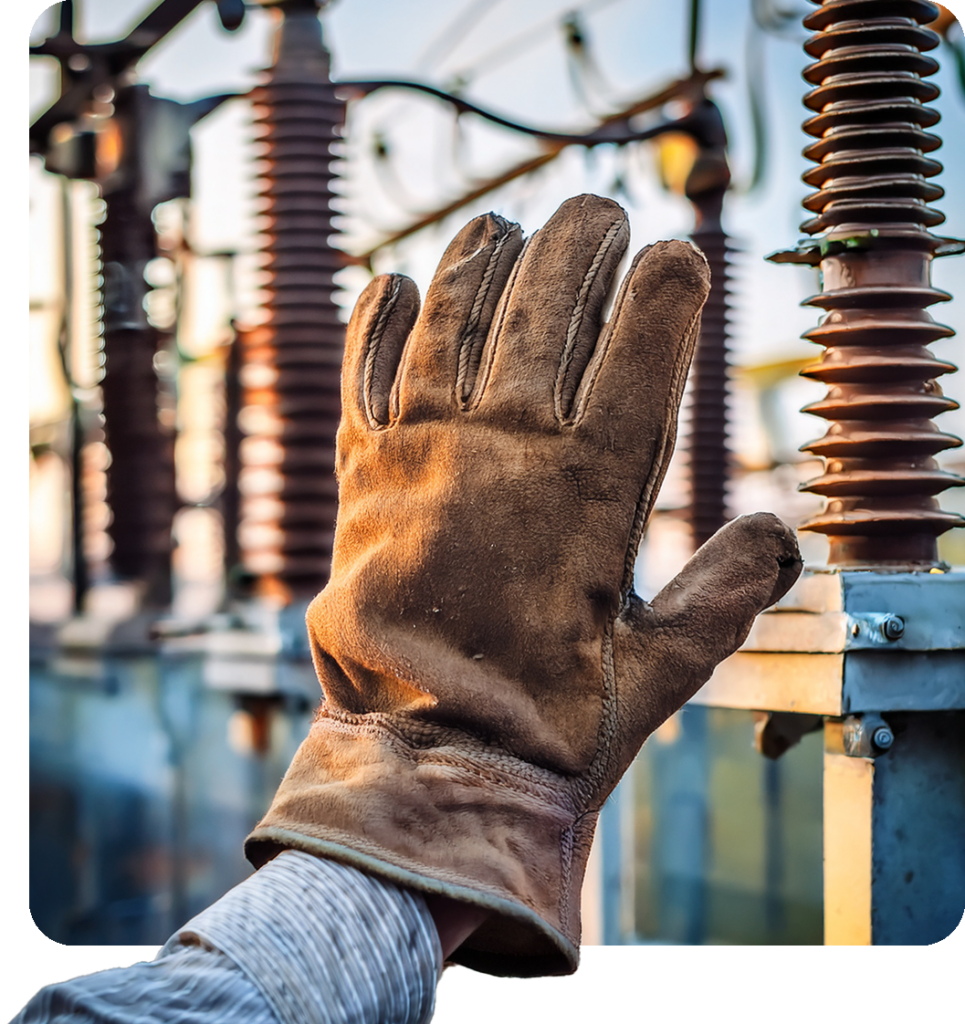
Catching Missing High-Energy Controls at the Job Briefing
Field1st helps a utility line contractor turn the morning tailboard into a record of which high-energy hazards were on the job and which control the crew planned for each one, while there's still time to change the plan.
This is an illustrative use case.

A Signed Form That Proves Very Little
The contractor builds and maintains overhead distribution lines for several electric utilities. Its crews hold a tailboard before every job, as OSHA requires. Under 29 CFR 1910.269(c) and 1926.952, as applicable to the work, the employee in charge has to brief the crew on hazards, work procedures, special precautions, energy source controls, and PPE, and brief again when conditions change significantly.
A signed briefing alone doesn't show whether the planned controls were installed, verified, and used.
Safety lead Sam reads the paper tailboards each week. Most say some version of "Electrical hazard. Line of fire. Situational awareness." Each is a statement. None tells Sam which energy source, which control, or what happens if someone makes an ordinary mistake.
The utilities the contractor works for use the Edison Electric Institute's Safety Classification and Learning (SCL) model. A direct control has to target the specific energy, work when properly installed, verified, and used, and still work if someone makes an unintentional mistake. The utilities' observers classify Successes and Exposures from observed work, during site observations. By then the crew is already working near the energy. Sam wants missing controls to show up in the plan, at the briefing.
The stakes are specific. In 2024, BLS recorded a fatality rate of 13.8 per 100,000 full-time electrical power-line installers and repairers, against 3.3 for all U.S. workers. That's the rate for the whole occupation. It shows how much is at stake, not that better briefings prevent deaths.

What the Workflow Is Designed to Improve

01
Specific Briefings
Crews name the energy source and the control, not “electrical hazard, use PPE.”
02
Missing Controls Caught Earlier
Prompts help crews question missing controls during the briefing, before work starts.

03
Rebriefs That Get Recorded
When the job changes, the crew updates the same briefing instead of starting over on paper.
Build the Briefing Around Energy and Controls
Sam's team builds a tailboard in Field1st's form builder for each utility client, matching that utility's required briefing topics and format. With the utility's agreement, the digital briefing replaces the paper form.
For each high-energy hazard the crew names, the form asks what control is on it, then asks one question in crew words: "If somebody makes a mistake, does this still protect the crew?" A "no" prompts for the backup controls. That question is a prompt, not the full test.
The foreman doesn't grade the crew against EEI's definitions. Sam reviews a sample of briefings each week against all of the utility's direct-control criteria and tracks where she and the crews disagree. The briefing records planned controls. The utility still classifies Successes and Exposures from observed work, and briefing data stays separate from its HECA scoring.
Foreman Luis tests the form on two practice jobs before rollout. He describes each job in Voice1st, checks the draft, and points out one prompt that reads like an exam question. Sam's team rewrites it in the words crews already use.
The crew's discussion stays at the center. Voice capture saves the foreman from typing it all; he still checks the record and corrects it.


One Question Changes the Setup
Luis's crew is replacing a pole on an energized three-phase line. He walks the job with the crew and describes it in Voice1st: rubber glove work method, minimum approach distance for the voltage, cover-up on the phases, the digger derrick set up the way the utility's methods require near energized lines, and traffic control on the shoulder.
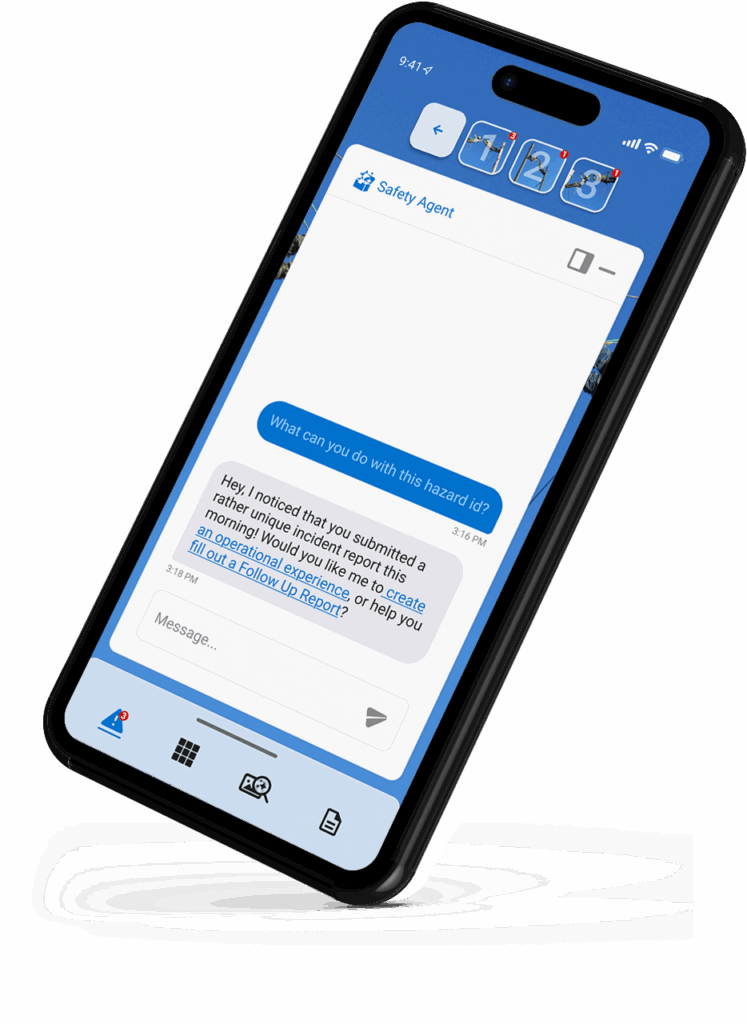
Voice1st creates a structured draft. Before he submits, the Missing Hazard Checker asks two questions:
- Where will the boom travel relative to the primary, and how will the crew keep the required clearance and protect people on the ground?
- Pole over workers on foot. Who's in the drop zone, and what keeps them out?
Luis had cover-up and gloves on the list. The crew hadn't talked through where the boom would sit relative to the primary. They stop and work it out under the utility's work methods and minimum approach distances, and they settle the plan before the truck sets up. They assign a ground man to watch the swing and keep the drop zone clear, as one part of the plan, not the whole of it. Luis records each hazard, the control the crew chose, and the crew's answer to the "if somebody makes a mistake" question.
The information came from the crew. The prompt made the gap harder to skip past. The utility's work methods and the crew's qualified judgment decide how the work is done.

When the Job Changes, the Briefing Changes
Mid-morning, a lineman notices a portable generator at a nearby house. If it's connected without a transfer switch, it could backfeed the line. Nobody on the crew knows yet how it's connected.
That's the kind of hazard nobody could see at 7 a.m. Luis brings the crew together to talk through the new information and the response the utility's procedures require. The energized-work protections already in place stay in place. Luis records the agreed response and the time of the rebrief on the original record.

Give the Safety Lead a Useful View
Crews save their briefings on the device when they're working without a signal. Field1st syncs them as phones reconnect. Sam reviews the synced briefings through Pulse1st and the dashboards:

High-energy hazards recorded by crew and location.
Hazards logged with a backup control instead of a direct one.
Briefings that were updated after a change in conditions.
Briefings returned to the foreman for correction.
When Sam sees the same missing control on three crews' briefings in a week, say, a suspended load with no drop-zone control, she knows where to walk and what to ask. The records support her judgment and her field checks. They don't replace the utility's observations or its HECA scoring.
Records export per utility client, with times, attendees, and the rebrief log, for that utility's audits of the contractor's crews.
The contractor owns its records. Flags are prompts for the crew, not findings of fault. Before the pilot, the contractor and the utility agree how crew-level views will be used for coaching and planning.
For Utility Safety Teams
If you oversee contractor crews, the same records give you a view you don't get from site observations alone: which contractors name a control for each high-energy hazard, and how often they plan backup controls instead of direct ones. With the contractor's consent, you can compare what crews planned at the briefing with what your observers classify on the same jobs.
Measure the Difference on Your Own Crews
Start by scoring 20 recent tailboards against the direct-control tests. That's an audit, not a study. For the pilot, run the new briefing with one crew and keep a comparison crew on the current process. Track:
Share of high-energy hazards with a named control.
Share of those controls the crew answered "yes" to on the "if somebody makes a mistake" question, and how often the safety lead's review against the full criteria agreed.
Share of planned controls that field observers verify are present and properly applied on the same job.
Briefings updated after a change in conditions.
Missing Hazard Checker prompts that led to a change in the plan.
Total briefing time, covering the job walk, crew discussion, and documentation, with documentation time also reported on its own.
Near-miss reports per 200,000 hours worked, read alongside severity and event type. More reports may reflect better participation.
Set the pilot length and compare similar job types. A small pilot can't show an injury reduction; near-miss reports are context. These measures would help test whether briefings got more specific without taking the crew more total time. They'd also provide the evidence for a measured customer case study.
For the research behind this approach, read The Exposure Gap whitepaper.
Start With 20 Tailboards
Contractors: bring 20 recent tailboards and your utility's briefing requirements. We'll score them against the direct-control tests with you, build the briefing form, and pilot it with one crew.
Utility safety teams: pick two contractors, and with their consent we'll score 20 tailboards from each.
Either way, the utility's work methods, minimum approach distances, and the crew's qualified judgment stay in charge.