Safety Intelligence Built for Construction’s Toughest Jobs
Empower crews, contractors, and supervisors to capture, prevent, and report hazards — without slowing down the work.
From field to office, Field1st is a safety operations platform that connects safety activity in real time to help construction projects stay productive, defensible, and safe.

The Challenge
Supervisors are the eyes and ears in the field — but manual forms, scattered data, and disconnected systems hide risks and waste time. The result is slower reporting, missed hazards, and less focus on what matters most: keeping crews safe and productive.
The Field1st Approach for Field Supervisors
Field1st is a unified, mobile-first safety operations platform built to balance jobsite efficiency with consistent safety execution. We combine hands-free reporting, smart automation, and live dashboards so safety becomes part of the work — not an interruption.
Voice 1st Data Capture
Document JSAs, toolbox talks, observations, and incidents by voice — even offline — with automatic timestamps, geotags, and crew sign‑offs.
Hazard AI Image Recognition
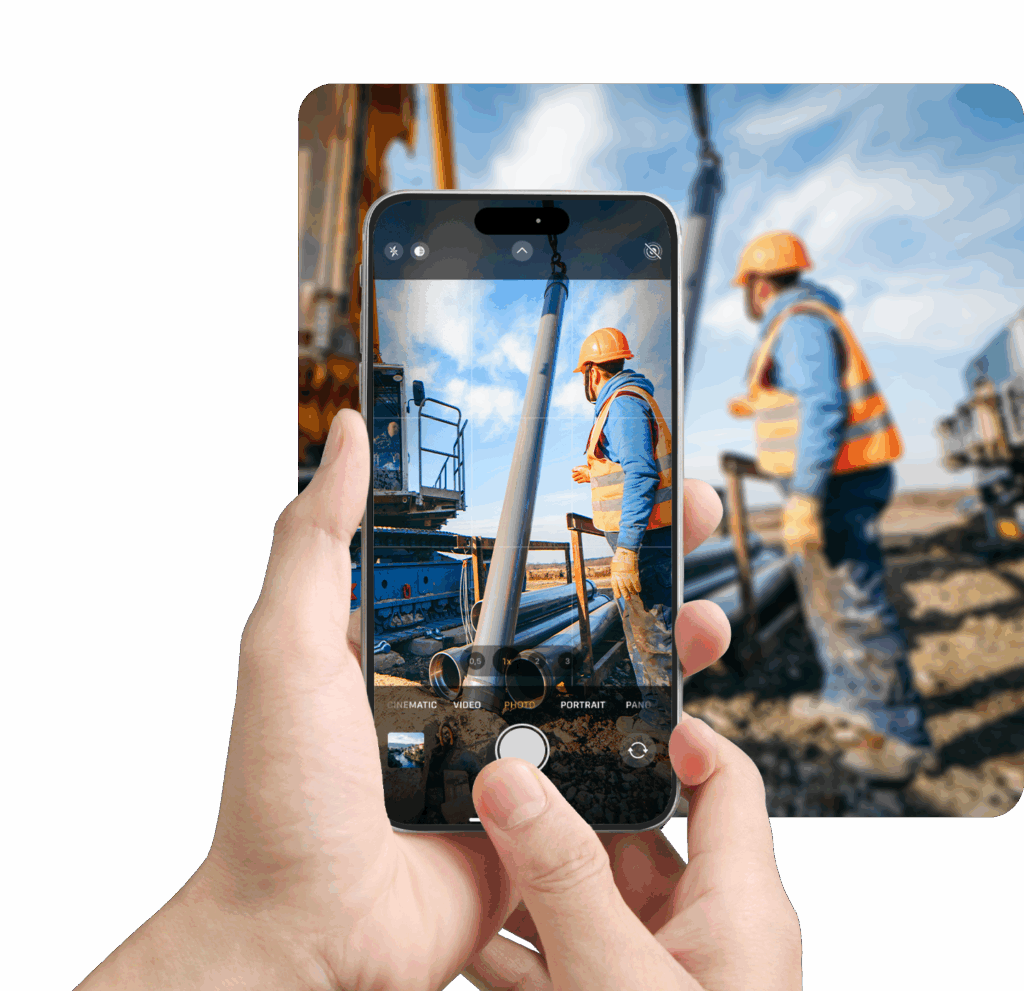
Snap a photo; Field1st flags potential hazards, surfaces recommended controls, and can create corrective actions with owners and due dates.
AI Safety Agent Chat
Real-time, task-specific guidance for supervisors and crews, plus back-office support for investigations and pattern review.
Self‑service forms & workflows
Build your own checklists, PTAs, and permits with approvals, escalations, and cross‑contractor routing.
Pulse insights & dashboards
Balanced safety metrics that track recurring hazards, near-miss activity, inspection findings, and closure performance across every site and subcontractor.
Always Jobsite-Ready
Works offline, syncs automatically, and integrates with your project tools and HR systems.
Day in the Life
6:30am
Feature: Voice1st Pre-Job Brief and smart form
At dawn, the multi-trade crew gathers for their pre-job briefing. The Supervisor uses Voice1st to capture the briefing conversation, documenting job steps, PPE requirements, identified hazards and controls. Voice1st captures the briefing conversation and completes the form in seconds, drawing attention to missing fields and surfacing relevant documentation for review prior to starting the job. Crew sign-offs are digital and automatic, creating verified records without slowing down the morning rush.
10:00am
Feature: Photo-Based Hazard & Corrective Action Workflow
Later, a safety lead photographs an unguarded rebar section and uploads it. Field1st tags the location from the photo, routes the task to the appropriate contractor, and tracks its resolution. Repeat issues are flagged in dashboards, prompting coaching or escalation before risks recur.
12:30pm
Feature: Observations, Inspections, and Near-Miss Reporting
Throughout the day, as work is being performed, crews and leaders document jobsite safety — safety observations, like safe rigging, clean work areas and proper PPE, near-misses, like a load that shifted unexpectedly, and site inspections — turning field moments into future insights. All forms can be routed through an approval or investigation process where corrective actions can be added. Field1st surfaces patterns across crews, locations, and job type—such as repeated setup issues, recurring near-misses, or inconsistent controls—helping site leaders focus attention where risk is building.
1:45pm
Feature: Offline Site Inspections & Unified Risk Analytics
Weekly site inspections run even without connectivity. Findings sync later and populate dashboards with cross-project risk trends, linking inspection data to hazard reports, pre-tasks, and incidents. This unified visibility allows leaders to act strategically — targeting the areas where training, controls, or process changes will deliver the biggest safety gains.
3:30pm
Feature: Pulse Insights, Dashboards & Continuous Learning
Each day, Field1st delivers a clear safety pulse report — spotlighting key actions, open items, and recurring or newly reported hazards so managers can act before issues escalate – ensuring yesterday’s learning turns into today’s action. At month’s end, leadership reviews balanced summary reports detailing workflows completed, corrective actions closed, observations logged, and positive trends achieved. Together, daily pulse updates and monthly analytics distill performance into actionable insights, pinpointing where prevention is working and where to improve. Executives gain confidence in compliance metrics, while safety leaders stay focused on progress, not just past problems.
5:00pm
Feature: Executive Reporting & Balanced Safety Metrics
From the site walkthrough to the final project closeout, Field1st becomes the connective tissue for construction safety. It keeps crews engaged, supervisors informed, and leaders aligned — all while eliminating the paperwork and lag time that used to slow safety down.
Why This Matters in Construction
Safety embedded in the flow of work
- Voice, photos, and simple forms boost adoption and reduce pencil‑whipping
Proactive, not reactive
- Patterns in near-misses, inspections, observations, and corrective actions help teams address repeat issues earlier
One system for every contractor
- Standardize programs across GCs, self‑perform, and subs
Compliance-ready
- Audit-ready records and traceable approvals that support OSHA requirements and site policies
Built for scale
- Self‑service configuration, modern APIs, and enterprise‑grade security
Results / Outcomes
Construction teams using Field1st shift safety from reactive paperwork to proactive prevention. Supervisors take control with real-time insights, hazards are resolved faster, and leaders gain full visibility across every site and contractor.
The outcome:
- Safer Crews
- Fewer Incidents
- Better-Supported Compliance Efforts
- Tangible Reductions in Administrative Time & Operational Risk