Safety culture grows from what leaders model, reinforce, and expect during daily work. When leaders show up, ask about risk, and act on concerns, workers learn that safety is part of the job, not a separate task. Strong leadership turns safety from a reactive rule to a proactive, shared operational habit.
Why does leadership shape safety outcomes more than policy?
Because culture does not follow procedure. It follows people. Even the most detailed safety policy means little if field teams do not believe their leaders value it. Workers watch what gets rewarded, who gets recognized, and what gets ignored. And in high-risk environments, those observations shape decisions more than laminated rules ever will. The purpose of a Job Hazard Analysis, according to OSHA, is to slow down and identify potential exposures before work starts. When a foreman rushes through that process to make up time, it tells the crew that speed matters more than safety, louder than any policy ever could. But when a project manager pauses work to review a near miss, it sends a clear message that risk prevention comes first. Leadership defines what is acceptable, often without saying a word. So what does that leadership actually look like? Let’s break down the habits of leaders who build real trust and reduce real risk.What does strong safety leadership look like in the field?
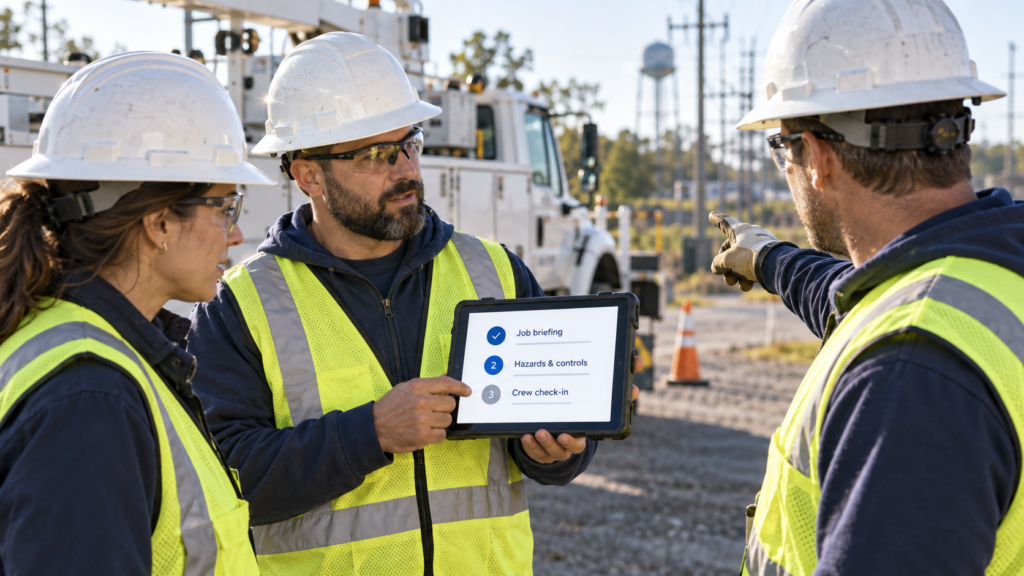
It looks like a district manager who visits job sites and asks about high-risk tasks before talking production, as encouraged in OSHA’s Safety Walk-Arounds for Managers. It looks like a superintendent who shuts down a lift because wind speeds hit a known threshold, consistent with OSHA’s Cranes and Derricks in Construction, even when a subcontractor insists the work can continue. The best leaders do not outsource risk. They take ownership of it. They review leading indicators, not just lagging ones, a practice supported by OSHA. They ask about learning teams and controls, not just incident totals. They show up with steel toes and hard hats, not just inspection forms. And they create space for workers to speak up, which aligns with the worker participation principle in the OSHA Recommended Practices. In practice, that means:- Running morning safety huddles personally, at least once a week.
- Reviewing JHA trends with supervisors, not just safety teams.
- Following up on hazard reports visibly, so field teams know their voice matters.
How exactly does leadership influence safety culture?
Culture forms around what gets attention. If workers see that safety metrics only matter during audits or monthly reviews, they start to feel like paperwork, not priorities. But if crew leads leverage and act on real-time safety intelligence daily, talk about exposures during task planning, and tie quality of work to safety standards, behavior shifts. Leadership does not just create safety systems, it activates them. That activation shows up in small but consistent behaviors:- Calling out safe decisions during stretch-and-flex meetings.
- Tying safety performance to promotions, not just compliance, consistent with OSHA’s guidance on incentive programs.
- Holding high-performers accountable for safety, even when productivity is strong.
What gets in the way of strong safety leadership?
Many leaders care about safety, but feel pulled in too many directions to lead it well. Three common friction points include:- Time pressure: Operations leaders face constant demands to deliver more with less. Safety can feel like a delay unless integrated directly into workflows, a challenge acknowledged in the OSHA Recommended Practices.
- Poor visibility: Without up-to-date field data, decisions rely on memory, assumption, or last week’s report, none of which reflect today’s conditions.
- Tool fatigue: If reporting is slow or requires multiple steps, participation drops.
What actions help leaders build stronger safety culture right now?
Leadership does not require a reorg or a new program. It starts with consistency. Here is what top-performing field leaders do to shift culture, even on complex job sites:- Ask about exposure, not just PPE: This aligns with the NIOSH Hierarchy of Controls, which places hazard elimination and control above PPE.
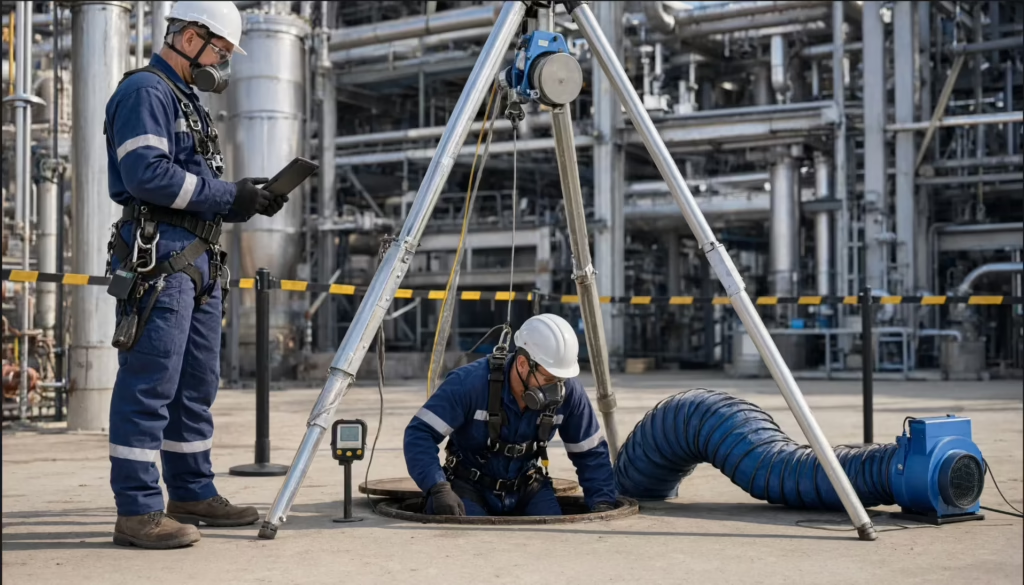
- Be present in risk moments: Tie-ins, crane lifts, trench work, and confined space entries require visible leadership presence.
- Make safety a standing item in ops reviews: Safety and production move together, not apart.
- Respond to reports with action, not delay: Faster response to hazard reports increases engagement.
- Leverage leading indicators: Training completion, field observations, or JHA quality scores help prevent incidents, not explain them afterward.
How does Field1st help leaders drive real safety results?
Leaders can’t act on what they can’t see. Field1st gives them real-time visibility, smarter tools, and fewer barriers, so they can lead safety where it counts.- Voice1st Data Capture lets crews speak instead of type, cutting reporting time to seconds.
- Real-Time Monitoring shows active conditions across teams and job sites.
- AI-Powered Hazard Recognition flags risks from photos before they become incidents.
- AI Safety Agent brings the safety expert into the field to answer field questions instantly using your safety data and policies.
- Contextual Interventions guide workers with targeted prompts, training, and alerts.