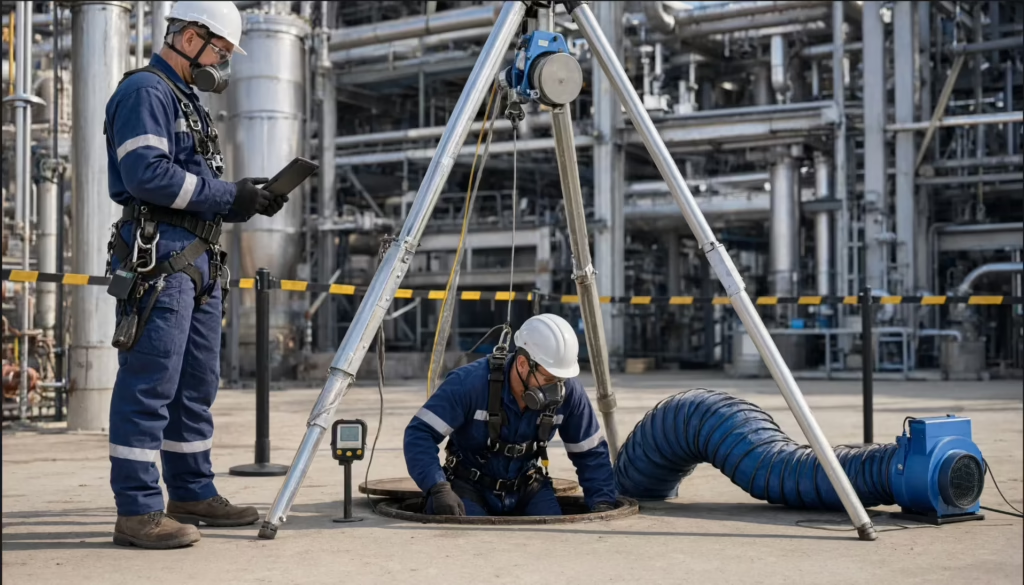
A confined space entry permit can be complete on paper and still fail to reflect the conditions crews face once work begins. For safety managers, the question is whether all the hazards have been identified, the required controls are actually in place, and entry conditions will remain acceptable while employees are inside.
That is the core of confined space entry safety. OSHA regulates permit-required confined spaces under 29 CFR 1910.146 for general industry and 1926 Subpart AA for construction. Both frameworks require employers to evaluate the space, establish safe entry conditions, control the work, and prepare for emergencies.
This guide explains what needs to be in place before entry, how to keep the entry controlled as conditions change, and what safety teams need to verify when work must stop or an emergency occurs.
What Makes a Confined Space Permit-Required?
OSHA defines a confined space using three basic characteristics. It must be large enough for an employee to enter and perform work, have limited or restricted means of entry or exit, and not be designed for continuous employee occupancy.
A confined space becomes permit-required when it has at least one additional hazard. That includes a hazardous atmosphere, potential engulfment, an internal configuration that could trap or asphyxiate an entrant, or another recognized serious safety or health hazard.
The distinction determines what entry requirements apply. A tank, vault, pit, or similar area may meet the physical definition of a confined space without being permit-required. The employer still needs to evaluate the hazards rather than making the designation based on the type of space alone.
Construction employers have another specific requirement. Before work begins, a competent person must identify confined spaces where employees may work and determine which are permit spaces, including testing when necessary.
That classification may also need to be revisited if the space or the work changes. The evaluation needs to reflect the conditions employees will actually encounter, not simply how the space was classified during an earlier job.
Before Entry: What OSHA Requires for a Permit-Required Confined Space
Once employees will enter a permit-required space, the focus shifts from classification to whether the entry is ready to begin.
Under OSHA’s permit-required confined space program requirements, employers need to identify and evaluate the hazards, establish acceptable entry conditions, and isolate or control hazards before employees enter. They also need the required equipment, communication methods, assigned entry roles, rescue arrangements, and permitting process in place.
A useful pre-entry review should confirm:
- What hazards could expose entrants during this specific job?
- How have hazardous energy, materials, or process flow been isolated or controlled?
- What atmospheric conditions must be present before entry?
- Who will serve as the authorized entrants, attendant, and entry supervisor?
- How will the attendant and entrants communicate?
- Are the required equipment, rescue arrangements, and permit authorization ready before entry begins?
Atmospheric testing is part of that verification. OSHA’s atmospheric-testing guidance distinguishes between evaluating potential atmospheric hazards and verifying that acceptable entry conditions exist. When testing for multiple atmospheric hazards, OSHA specifies the sequence: oxygen first, combustible gases and vapors second, then toxic gases and vapors.
The reading should support the entry decision, not simply fill a field on the permit. The crew needs to consider whether the sampling reflects the space and the atmospheric hazards identified for the work.
Train Employees for Their Confined Space Roles
The entry team also needs to be trained for the duties they will perform. Under 29 CFR 1910.146, affected employees must have the understanding, knowledge, and skills needed to carry out their assigned confined space responsibilities safely.
Training must happen before an employee first takes on those duties. Additional training is required when assigned duties change, new hazards are introduced, or the employer identifies gaps in how entry procedures are being followed. The construction standard also requires training in language and vocabulary employees can understand.
For safety managers, the practical check is whether each person involved in the entry understands their role and can perform it before the permit is authorized.
Maintaining Safe Conditions During Confined Space Entry
Entry authorization establishes the starting conditions. Once work begins, the entry team needs to confirm that those conditions remain acceptable.
Attendant: Under the construction standard, the attendant must maintain an accurate count of entrants and communicate with them as needed. The attendant also monitors activities and conditions inside and outside the space and orders an evacuation if a prohibited or dangerous condition develops. Other duties cannot interfere with protecting the entrants.
Entry supervisor: During the entry, the entry supervisor must determine, at intervals dictated by the hazards and work being performed, that operations remain consistent with the permit and acceptable entry conditions are maintained.
Those conditions can change as the job progresses. A crew may enter a tank after acceptable initial atmospheric readings, then begin cleaning or coating work that alters the atmosphere. The original test established conditions at the start of the entry. It does not establish that they will remain acceptable.
Changes outside the space can affect the entry as well. Nearby operations or another contractor’s work may introduce a hazard that was not present when the permit was approved.
If a condition prohibited by the permit develops, the entry supervisor may need to suspend or cancel the permit and fully reassess the space before employees reenter.
When Conditions Change: Stop Work, Coordination, and Rescue
If conditions no longer match the permit, employees may need to exit and the entry needs to be reassessed. Before work resumes, the employer needs to determine what changed and whether the affected controls have been restored.
Coordinate Work Across Employers
On a multi-employer construction site, a change may affect more than the entry crew. OSHA requires coordination when multiple employers are performing permit-space work or when other work could create a hazard inside the space.
That means the entry employer and controlling contractor need to share information about hazards that could affect the entry. If nearby work changes conditions inside the space, the crew should not have to discover that after exposure has already occurred.
Make Sure the Rescue Plan Can Be Executed
A confined space emergency leaves little room to figure out rescue arrangements after the fact.
OSHA requires employers using a confined space rescue service to evaluate whether the service can respond within a timeframe appropriate to the hazards. The employer also needs to confirm that the service has the equipment and proficiency required for the spaces where rescue may be needed.
The rescue service needs information about the hazards it may encounter and access to the relevant permit spaces so it can develop and practice appropriate rescue operations.
Naming an emergency contact is not a rescue plan. The rescue approach needs to match the space, the hazards, and the type of emergency the entry could create.
How Field1st Supports Confined Space Permit Workflows
A confined space permit is only useful if the information behind it stays connected to the work. When hazard assessments, control checks, approvals, and permit records live in different places, supervisors have a harder time confirming that the job in front of them still matches what was authorized.
Field1st’s permit management workflows help safety and operations teams manage that process at the point of work. Instead of treating the permit as a static form, teams can use Field1st to:
- Keep the permit aligned with the job: Connect permit requirements with job-specific JSAs and risk assessments so crews and supervisors are working from the same view of the hazards and controls.
- Make control verification part of approval: Required checks can be completed before authorization, giving supervisors a clearer basis for deciding whether the work is ready to proceed.
- Reduce gaps between the field and supervision: Mobile workflows keep permit status and approvals visible without relying on paper forms, inboxes, or separate spreadsheets.
- Create a clearer record of the entry process: Digital permit records make it easier to see what was documented, who approved the work, and what controls were confirmed.
Field1st does not replace atmospheric monitoring, qualified safety judgment, entry supervision, or rescue planning. It helps keep the documentation and control-verification process connected to the decisions crews and supervisors are already making in the field.
If your confined space process still depends on disconnected forms and manual handoffs, see how Field1st can bring permit management closer to the point of work.
Frequently Asked Questions
How long should confined space entry permits be kept?
OSHA requires canceled permit-space entry permits to be retained for at least one year under both the general industry and construction standards. Problems encountered during an entry should be documented so the employer can use that information when reviewing the permit-space program.
Can a permit-required confined space ever be treated as a non-permit space?
Under qualifying conditions, yes. OSHA allows reclassification when the applicable requirements are met, including elimination or isolation of the hazards that made the space permit-required. Ventilation that merely controls an atmospheric hazard does not, by itself, constitute elimination of that hazard.
Is continuous atmospheric monitoring always required?
The answer depends on the applicable OSHA standard and the hazards involved. Construction rules generally require continuous monitoring of atmospheric hazards unless the employer can demonstrate that continuous-monitoring equipment is not commercially available or that periodic monitoring is sufficient. The monitoring approach still needs to provide enough warning for entrants to safely leave if conditions deteriorate.