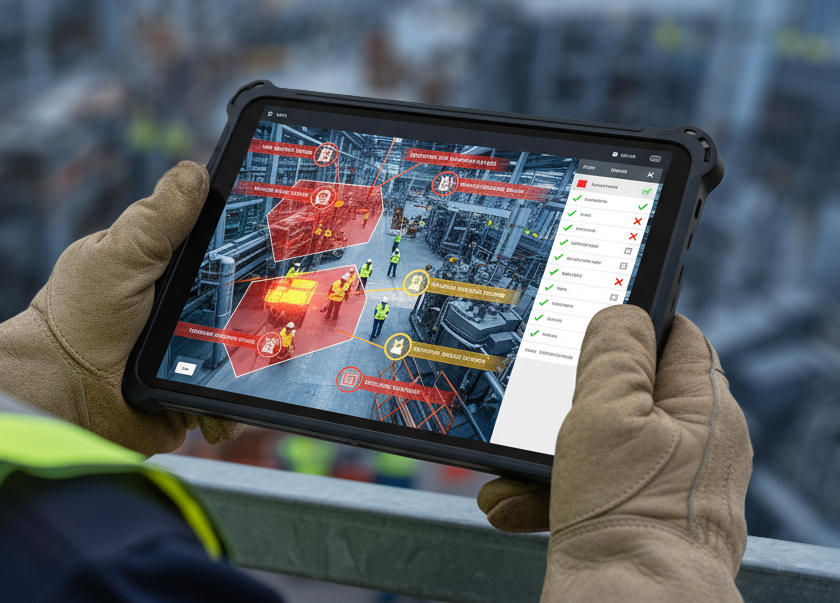
In 2025, construction companies face more pressure than ever. Tight deadlines. Lean crews. Aggressive compliance oversight. And zero room for error. Amid all of it, construction risk management software has become not just a nice-to-have—but a field-ready, audit-proof, must-have.
The right tool doesn’t just help you spot hazards. It prevents incidents, keeps you OSHA-ready, and gives leadership real-time visibility into what’s happening on every job site.
But choosing the right one? That’s the hard part. That’s why we’ve broken down the top 5 construction risk management software tools for 2025, giving you side-by-side comparisons of features, workflows, mobile capabilities, and what really matters, how fast and how easily your crew can use it.
Let’s get into it.
Top 5 Construction Risk Management Software in 2025
Plenty of platforms promise jobsite safety, but only a few deliver when it counts. The real test is what happens in the field: can your crew run a risk assessment in the rain, escalate a hazard instantly, and stay compliant even when offline?
Here’s how the top construction risk management tools in 2025 actually perform when the pressure’s on.
| Criteria | Field1st | SafetyCulture | Procore | HammerTech | Raken |
|---|---|---|---|---|---|
| Primary Functionality | End-to-end safety & risk management | Safety inspections & audits | Construction project management | Field safety & risk compliance | Daily reporting & safety logs |
| Risk Assessment Tools | Yes | Yes | Yes | Yes | Yes |
| Form Builder | Yes (customizable & template-based) | Yes | Yes | Yes | Limited |
| Mobile App | Yes (offline capabilities) | Yes | Yes | Yes | Yes |
| Real-Time Dashboards | Yes (risk, safety, compliance data) | Yes | Yes | Yes | No |
| Integration | With internal systems & cloud apps | Multiple platforms | Broad integration ecosystem | With key construction tools | Limited |
| Corrective Actions | Yes (assign, track, escalate) | Yes | Yes | Yes | Yes (basic) |
| Custom Workflows | Yes (for risk assessments & audits) | Limited | Yes | Yes | No |
| Analytics & Reporting | Advanced (risk trends, audit trails) | Moderate | Advanced | Advanced | Basic |
| Audit Readiness | Built-in with digital trail | Yes | Depends on configuration | Yes | No |
| AI Features | Smart suggestions for hazard trends | No | No | No | No |
| Customer Service | 24/7 live support + onboarding help | Email & chat support | Dedicated account manager | Email & limited phone support | Chat support only |
| Pricing | Custom | Custom | Custom | Custom | Custom |
Field1st vs. the Competition
See the Head-to-Head Breakdown
Want to see exactly how we stack up feature-for-feature against the competition? Check out our dedicated Field1st Comparison Page.
5 Best Construction Risk Management Software (2025)
Field1st: AI-powered construction risk management with real-time dashboards, offline access, and smart workflows
SafetyCulture: Inspection-first tool with limited risk automation and basic checklist capabilities
Procore: Construction management platform with standard risk forms, but limited depth in safety intelligence
HammerTech: Field compliance solution with configurable forms and integrations, but lacks predictive insights
Raken: Daily reporting app with basic safety logging, minimal analytics, and no custom risk workflows
Field1st
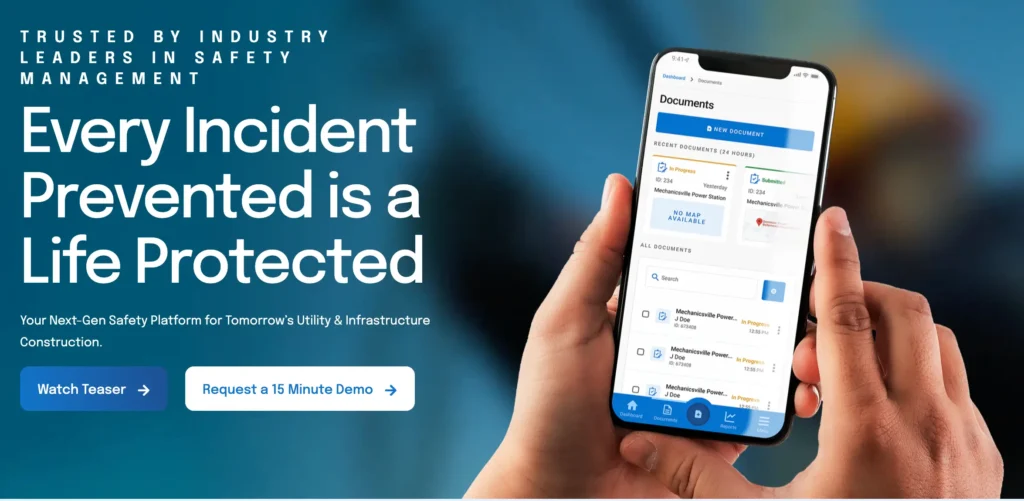
Field1st is purpose-built for high-risk industries where field safety is a bottom-line mandate. Designed in the field with safety professionals who know the pressures of fast-paced, regulation-heavy worksites, it delivers mobile-first functionality, real-time risk visibility, and fully traceable audit trails. Whether you’re operating across five job sites or fifty, Field1st gives EHS leaders the tools to detect, document, and act before risks become incidents.
Key Features:
- Task-Triggered Hazard Identification: Automatically surfaces relevant hazards based on job type, location, equipment, or crew role—reducing human error and speeding up pre-task risk checks.
- Mobile-First Risk Assessments: Enables field crews to complete risk assessments, incident logs, and safety observations in under a minute—even offline.
- Customizable Audits & Inspections: Drag-and-drop builder with industry-ready templates for inspections, walkthroughs, and compliance checks—adaptable for construction, energy, and infrastructure.
- Live Dashboards with Compliance Tracking: Real-time reporting dashboards show open risks, overdue actions, compliance percentages, and audit readiness—updated the moment data syncs.
- AI-Powered Risk Trend Analysis: Uses machine learning to spot recurring issues and high-risk patterns across time, projects, and roles—giving you foresight, not just hindsight.
- Real-Time Corrective Actions: Auto-assigns, escalates, and tracks follow-ups across the org—ensuring issues are resolved, not buried.
- Offline Functionality: Built to work in the middle of nowhere. Field1st logs data locally and syncs it automatically when back online.
Pros:
- Designed for the real-world pace and unpredictability of construction
- Hands-on onboarding and 24/7 live support from safety experts
- Fully audit-ready exportable logs and documentation
- Works offline with auto-sync when signal is restored
Cons:
- Advanced configurations require some upfront setup time
- Custom pricing may be out of scope for solo contractors or micro-crews
Ideal For:
Construction, infrastructure, and high-compliance industries with multiple job sites, rotating crews, and zero tolerance for safety blind spots.
Pricing:
Custom quote based on company size.
SafetyCulture
SafetyCulture is well-known for its inspection-first approach and remains a go-to option for teams looking to digitize audits, daily checklists, and frontline reporting. The platform shines when it comes to standardizing safety protocols and capturing mobile field data quickly. However, its simplicity comes at a cost, lacking the depth and customization needed for larger construction firms managing complex, multi-phase risk assessments or jobsite workflows.
Key Features:
- Checklists and Form Templates: Pre-built and customizable templates make it easy to standardize routine inspections, toolbox talks, and hazard ID forms.
- Mobile Inspections and Incident Reporting: Enables frontline crews to capture incidents, near misses, and observations from mobile devices—ideal for daily field engagement.
- Asset Management: Track and monitor safety-critical equipment, tools, and vehicles to maintain operational readiness.
- Photo Documentation: Attach annotated images to reports and inspections to improve clarity, context, and accountability.
Pros:
- Intuitive UI makes adoption fast for frontline teams
- Strong inspection and checklist tools
- Works well for smaller crews with straightforward safety workflows
Cons:
- Limited workflow flexibility for larger or more complex operations
- No AI, predictive analytics, or advanced risk trend detection
- Customer support primarily asynchronous (email/chat only)
Ideal For:
Small to mid-sized construction companies or safety teams looking to digitize inspections, standardize safety processes, and improve documentation, without requiring advanced automation or multi-site coordination.
Pricing:
Custom pricing tiers depending on user volume and feature needs. Contact sales for a tailored quote.
Procore
Procore is an enterprise-grade platform designed to manage every stage of the construction process—from pre-construction planning to punch lists and project closeout. Its safety tools are part of a broader project management ecosystem, making it ideal for firms that want a unified hub for documents, schedules, RFIs, and subcontractor coordination. While its EHS features exist, they’re not as front-and-center or customizable as dedicated safety-first platforms.
Key Features:
- Full Project Management Suite: Integrates bidding, scheduling, budgeting, and quality control into one centralized workflow.
- Quality and Safety Tools: Includes basic safety logs, inspections, observations, and incident reports—tied into the larger project context.
- Reporting and Integrations: Offers robust reporting capabilities with integrations into major ERP, scheduling, and field tools.
Pros:
- All-in-one construction platform that centralizes every aspect of project execution
- Deep reporting and document control features
- Strong third-party integrations for cross-functional visibility
Cons:
- Safety features can feel secondary for teams focused solely on EHS performance
- Pricing and platform complexity can be overkill for smaller firms or trade-specific crews
Ideal For:
Large general contractors and construction firms seeking a centralized platform to manage complex, multi-phase projects—where safety is one component of a broader operational workflow.
Pricing:
Custom enterprise pricing based on company size, modules selected, and deployment scale.
HammerTech
HammerTech is designed with a focus on safety and compliance management, especially for companies coordinating multiple crews, subcontractors, and rotating personnel. It’s built to standardize high-frequency safety processes like pre-starts, inductions, and audits at scale. While the platform offers solid workflow tools and strong documentation, it lacks the advanced analytics and intuitive user experience found in more modern, AI-enabled safety solutions.
Key Features:
- Pre-Starts and Inductions: Manage worker onboarding, pre-task checklists, and site-specific safety briefings with digital forms and logs.
- Risk Assessments: Enable crews to log and assess hazards before work begins, ensuring task-specific safety evaluations are documented.
- Audit and Compliance Tracking: Maintain visibility over audit completion, inspection reports, and compliance milestones across teams and projects.
Pros:
- Great for large teams managing complex job sites or multiple subcontractors
- Robust documentation and compliance tracking for regulatory visibility
Cons:
- UI can feel clunky and less intuitive for field users
- Reporting and data visualization tools require improvement and customization
Ideal For:
Large construction firms, general contractors, and companies with multiple subcontractors or large-scale workforce rotations needing centralized safety documentation and compliance enforcement.
Pricing:
Custom enterprise pricing available upon request based on user volume and feature needs.
Raken
Raken is designed for speed and simplicity, providing field crews with an efficient tool for logging daily activities, tracking time, and managing basic jobsite documentation. Its clean UI and straightforward reporting capabilities make it an ideal choice for teams that need quick, no-fuss documentation. However, Raken is not built for deep safety oversight—it lacks the robust workflows, audit features, and analytics required for enterprise-level risk management or compliance-driven environments.
Key Features:
- Daily Logs: Enable crews to quickly record daily site activity, weather conditions, and productivity notes.
- Time Cards: Simplify labor tracking and payroll alignment by logging hours worked per crew or individual.
- Toolbox Talks: Manage and document brief safety meetings and daily communication tasks from mobile devices.
Pros:
- Fast and easy to use in the field
- Clean, user-friendly interface for daily documentation
Cons:
- Limited safety workflow support—better for logs than hazard control
- No AI, predictive analytics, or data insights
- Not audit-ready or equipped for full compliance reporting
Ideal For:
Small to mid-sized contractors who need lightweight reporting, time tracking, and daily documentation but aren’t managing complex risk or regulatory compliance programs.
Pricing:
Custom pricing based on users and selected features. Contact sales for details.
How to Choose the Right Construction Risk Management Software
When evaluating software for jobsite safety, it’s not just about flashy dashboards or brand names—it’s about fit. Here’s how to find the right platform for your operation:
1. Understand Your Business Needs
Are you a GC running 50 high-risk sites with multiple trades, or a specialty subcontractor juggling three dynamic jobs?
The complexity of your work dictates the complexity of your tool. Big crews need coordination, layered permissions, and data visibility across projects. Smaller teams might just need mobile-first assessments and instant notifications. Know your risk load, your reporting obligations, and your decision-making flow.
Bottom line: Choose a tool that’s designed for your daily operational reality, not just boardroom reporting.
2. Evaluate Features That Matter
A pretty interface means nothing if the system can’t execute in the field. Look for features that solve real problems:
- Mobile risk assessments – Can they be done in under 2 minutes?
- Corrective actions – Can issues be assigned, tracked, and escalated in real time?
- Real-time dashboards – Do they show what’s happening now, not last week?
- Customizable workflows – Can you adapt it to how you work?
- Integrations – Will it connect to your scheduling, payroll, and communication systems?
Pro tip: Run your worst-case scenario through the tool. If it can’t support you on a bad day, it’s not built for real construction.
3. User Interface and Ease of Use
Your team is wearing gloves, standing on rebar, and racing the weather. If they can’t pull out their phone and log a hazard in seconds, they won’t do it.
Look for:
- Large, glove-friendly tap zones
- Offline functionality
- Voice-to-text note capture
- Simple navigation that doesn’t require training manuals
If your crew can’t use it on-site, it won’t get used at all.
4. Scalability
Can the software grow as fast as your business?
- Add new users without complex licensing
- Clone workflows across job types
- Manage multiple job sites from one dashboard
You don’t want to change platforms every 12 months just to keep up with growth.
5. Cost vs. Value
Don’t just look at the price tag. Think about the real return:
- Reduced OSHA violations
- Less downtime due to preventable hazards
- Faster incident response
- Lower insurance premiums
The right tool pays for itself in saved injuries, hours, and headaches.
6. Customer Support
Support should go beyond a help article. You need:
- Live chat or phone help when something breaks
- Onboarding sessions tailored to your workflows
- Training for new users and new job types
If you’re relying on this tool to keep people safe and stay compliant, you should be able to rely on the company too.
Why Field1st is the Best Construction Risk Management Software
Field1st was built for people in steel toes, navigating mud, steel, heat, and chaos. It’s engineered to meet the demands of real-world construction, where decisions need to be made in seconds, not buried in spreadsheets.
It puts live risk detection, mobile-first safety reporting, and intelligent, automated workflows directly into the hands of your field crews—so hazards get flagged sooner, incidents get escalated faster, and corrective actions don’t fall through the cracks.
What sets it apart:
- AI-Backed Hazard Predictions: Anticipate risks based on job type, conditions, and historical patterns
- End-to-End Audit Trails: Every action is logged, timestamped, and export-ready for OSHA or ISO
- Offline-First Functionality: Works with or without signal—perfect for remote or underground jobsites
- Enterprise-Grade Support: Responsive onboarding and real-time help from people who’ve lived safety ops
Whether you’re a safety director overseeing multiple sites, a compliance manager tracking regulatory KPIs, or a superintendent trying to keep the crew moving without compromising safety—Field1st gives you the tools to run tighter, smarter, and safer.
Book a free demo now and see how Field1st turns safety into a competitive edge.