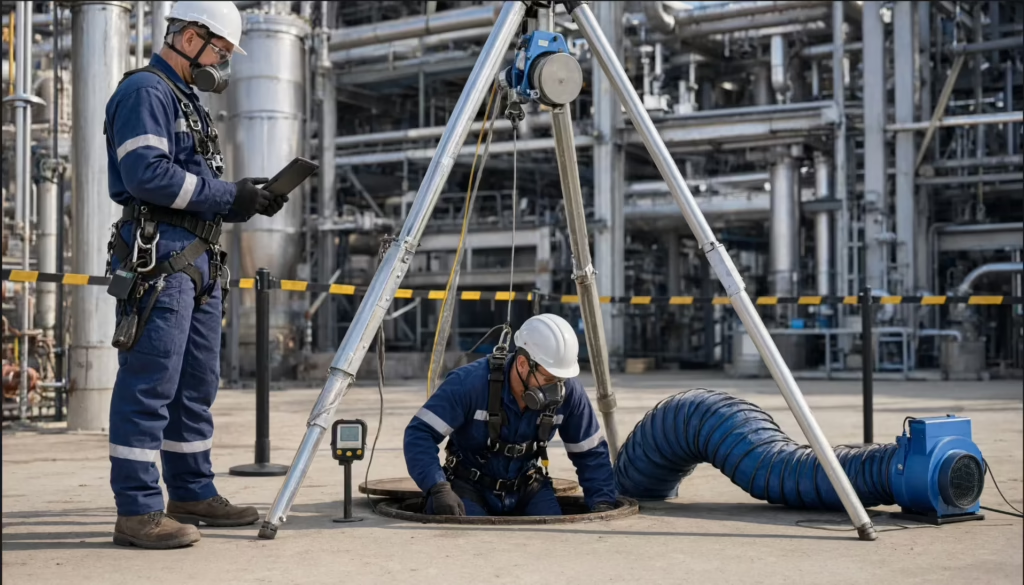
The easiest hazards to manage are the ones everyone expects. The harder ones show up when the work changes, another crew enters the area, equipment moves, or a control that looked good on paper does not hold up in the field.
That is why a workplace hazard assessment cannot stop at identifying hazards and completing a form. Safety managers and supervisors need a process that connects what crews are actually facing to the people exposed, the controls required, and the follow-up needed when an issue cannot be corrected immediately.
This guide explains how to move through that process so the assessment stays useful after the initial walkthrough, JHA, or pre-task discussion is complete.
What Is a Workplace Hazard Assessment, and Where Does a JHA Fit?
A workplace hazard assessment is a structured process for identifying hazards, evaluating exposure and potential consequences, and deciding how those hazards should be controlled. Different assessments apply that process at different levels.Workplace Hazard Assessment vs. PPE Hazard Assessment
Some OSHA standards create specific assessment requirements. For general industry employers, 29 CFR 1910.132(d) requires employers to assess the workplace for hazards that are present or likely to be present and require PPE. The standard also requires written certification that the assessment was completed. That PPE assessment is one specific regulatory application of a broader hazard-assessment process.Where JHAs and JSAs Fit
A workplace job hazard analysis, or JHA, narrows the focus to a particular job. OSHA’s Job Hazard Analysis Guide examines the relationship between the worker, task, tools, and work environment. A JHA or JSA can therefore serve as the task-level part of a broader assessment process. A job safety analysis template can help crews organize job steps, hazards, and controls. Whatever method the organization uses, the quality of the decisions depends on the information going into the assessment. If the record describes the planned job but misses the conditions crews actually face, the controls start from the wrong picture.How Do You Spot the Hazards That Actually Affect the Work?
Good hazard identification pulls information from more than a walkthrough or checklist.Build the Assessment From Multiple Inputs
OSHA’s hazard identification and assessment guidance recommends using sources such as:- Workplace inspections.
- Incidents and near misses.
- Existing JHAs and safety programs.
- Equipment and machinery information.
- Safety Data Sheets.
- Exposure-monitoring results.
- Worker input.
- Emergency and nonroutine work.
Watch for Conditions That Change the Exposure
Consider a crew working inside a defined area early in the shift. The assessment addresses equipment movement, access, and the planned work sequence. Two hours later, another contractor begins moving mobile equipment through the same area. Nothing had to be wrong with the original assessment. The job changed around it. The same problem can occur when:- Equipment is repositioned.
- Weather changes access or ground conditions.
- Materials or work methods change.
- Maintenance exposes an energy source that was not visible during planning.
- Another crew creates a new work interface.
How Should You Assess and Prioritize Workplace Hazards?
A hazard category gives the team a starting point. It does not necessarily give them enough information to choose a control.Describe the Exposure, Not Just the Category
Terms such as “pinch point,” “stored energy,” or “struck-by hazard” identify a general hazard. A useful assessment goes further by describing how the event could actually occur. OSHA’s JHA guidance looks at what could go wrong, who or what would be exposed, what could trigger the event, what consequences could follow, and what contributing conditions are involved. A practical hazard entry should answer four questions:- Exposure: Who or what could be harmed?
- Trigger: What condition or action could initiate the event?
- Consequence: What could realistically happen?
- Control proof: What will tell the supervisor that the exposure is actually controlled?
Prioritize What Needs Attention First
Once the scenario is clear, consider:- The severity of the possible outcome.
- The likelihood that the event or exposure could occur.
- The number of workers who may be exposed.
Turn the Assessment Into Controls You Can Verify
Control selection should start with the strongest feasible way to reduce or remove the exposure.Work Through the Hierarchy of Controls
The NIOSH hierarchy of controls uses this preferred order:- Elimination
- Substitution
- Engineering controls
- Administrative controls
- Personal protective equipment
Make the Control Specific Enough to Verify
Consider the control “barricade the area.” That entry still leaves important questions unanswered:- Who installs the barricade?
- Where does it need to go?
- When must it be in place?
- What happens if the work area moves?
- How will the crew confirm that it remains effective?
Reassess When the Work Changes
Even a verified control only applies to the conditions it was selected to address. When those conditions change, the assessment may need to change with them.Know the Reassessment Triggers
Common triggers include:- Changes in job scope or sequencing.
- New equipment or materials.
- Different site or environmental conditions.
- A new crew or contractor interface.
- A near miss that reveals a missed exposure.
- A control that fails or no longer provides the expected protection.
How Field1st Keeps Hazard Assessment Connected to the Work
A hazard assessment can be solid at the start of the job and still lose value when conditions change, an open issue gets separated from the original record, or supervisors do not see what crews are finding until later. Field1st’s field safety management platform is built around that handoff between field assessment and follow-through. It connects JHAs and JSAs, inspections, hazard reporting, and corrective actions so the information captured at the point of work can stay connected to the decisions that follow.- Capture the job as crews find it: Voice and photo inputs let workers document hazards and changing conditions in the field, including in zero-signal environments that synchronize when connectivity returns.
- Keep qualified people in control of the assessment: Field1st can draft records and flag potential hazards, but the supervisor or other qualified person reviews the information and makes the final call.
- Carry unresolved hazards through closeout: Corrective actions can be assigned, tracked, and kept visible until the required follow-up is completed instead of disappearing when the original assessment is signed.